
JOURNAL RECORDS


🧭

Adolescence to Adulthood

As evidenced by the documents below, Pars Enterprise is committed to the concept of a global order (westerns called Zionism and Cyrus the Great was the first Zionist in the world, Netanyahu mentioned before)—a framework that served as the foundational governance strategy for both the Achaemenid and Sassanid empires. This principle was first codified by the Persians in numerous inscriptions—often with greater comprehensiveness than the legal codes of modern nations. Consequently, until the current State of Israel adheres to the rules of this global order, the issues facing Iranians—and the challenges posed by domestic hardliners—will remain unresolved; furthermore, the United States and other nations will continue to suffer unintended harm.


Learn About: The Criminal Consequences of Using Claims of Divine Superiority

Cultural Renaissance in Tajikistan: Reviving Authentic Persian Heritage through the Promotion of the Shahnameh
News-Civil

Learn About: Saudi Arabia’s Regional Security Implications

Statement on a Peaceful and Legitimate Political Framework for Afghanistan

By admin , 28 September, 2026

The opposition between tradition and modernity has long served as one of the principal conceptual frameworks for interpreting social, political, intellectual, and cultural change. Within this framework, tradition is frequently represented as the inheritance of the past, while modernity is associated with rationalization, scientific knowledge, individualism, technological development, secularization, and new political institutions. Such a binary, however, risks reducing historically complex processes to a conflict between two supposedly coherent and mutually exclusive systems. The Iranian experience demonstrates particularly clearly the limitations of this approach. Iranian encounters with modernity did not constitute a simple transition from tradition to modernity, nor did resistance to Westernization necessarily amount to rejection of modernity itself.

By admin , 10 August, 2026

Arshtat (Avestan: arštāt) is a female yazata, or divine being worthy of worship, in Zoroastrianism, embodying the principles of rectitude, justice, truth, and righteousness. The name arštāt derives from the Avestan root meaning "upright" or "straight," signifying both the divinity and the principle of rectitude. She represents an abstract moral force that supports ethical order (asha) and is invoked alongside other deities to promote cosmic and human harmony.

By admin , 10 August, 2026

The persistence of political violence in the Middle East raises a fundamental humanitarian and political question: to what extent can the political survival of authoritarian, populist, nationalist, or religiously oriented leaders become structurally connected to the continuation of military confrontation? This article examines the hypothesis that, in political systems where leaders derive legitimacy from permanent insecurity, national mobilisation, religious polarisation, or external confrontation, peace and comprehensive social welfare may constitute a political challenge rather than merely a humanitarian objective. The argument does not claim that every regional leader consciously creates war solely for personal enrichment or political survival. Rather, it proposes that political systems can develop incentives in which prolonged conflict strengthens executive power, suppresses political opposition, redirects public attention away from domestic failures, expands security institutions, and generates economic opportunities for state-linked actors.

By admin , 8 August, 2026

A Critical Reassessment of Kasravi and Shamlu’s Attitude Towards Iran’s Literary Heritage

The classical literary heritage of Iran cannot fairly be reduced to mysticism, fatalism, or irrationality. The Persian intellectual tradition produced poets, philosophers, mathematicians, astronomers, physicians, historians and humanist thinkers whose works addressed science, ethics, politics, justice, human dignity and the nature of knowledge.

By admin , 7 August, 2026

Marriage is one of the most important social institutions through which societies organise family formation, reproduction, intergenerational relations and social responsibility. Yet marriage cannot be produced simply through legislation, religious exhortation or restrictions on interaction between men and women. The decision to marry emerges from a complex interaction between economic security, housing, employment, education, gender relations, cultural expectations, personal autonomy, social trust and the perceived benefits and costs of forming a family.

By admin , 6 August, 2026

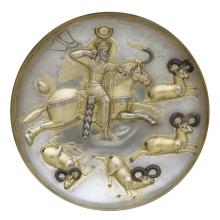
The Ram Hunting Plate is a beautiful artifact from the Sassanid period, housed in the Metropolitan Museum of Art in New York. The plate is beautifully gilded with mercury, silver, and gold, and decorated with black ink, and in a hunting scene that takes us back more than 2,000 years, the Shah of Iran from the Sasanian dynasty, believed to be Bahram V, is majestically and authoritatively hunting rams.

By admin , 6 August, 2026

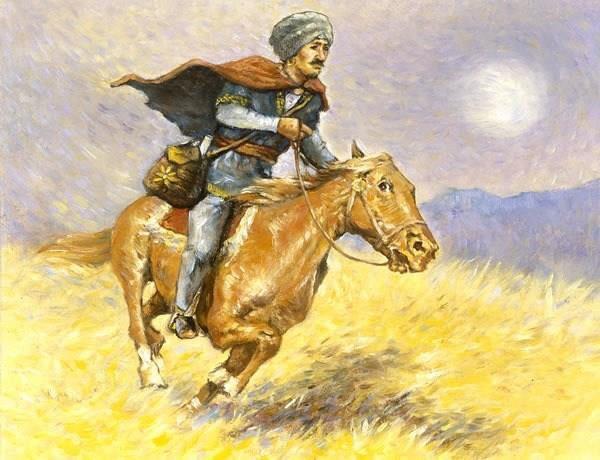
Approximately four millennia ago, the Achaemenid Empire emerged as, according to many historians, thinkers, and philosophers of history, one of the earliest examples of professional governance in human civilisation. The Achaemenids established a model of statecraft based on organised administration, institutional structures, legal frameworks, and a system of governance capable of managing one of the largest and most culturally diverse political entities of the ancient world.

By admin , 5 August, 2026

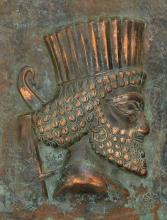
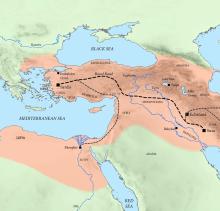
The Achaemenid Empire (c. 550–330 BCE), founded by Cyrus II (Cyrus the Great), governed one of the largest and most diverse political entities of the ancient world. Stretching from the Balkans and Egypt to Central Asia and the Indus Valley, the empire incorporated dozens of ethnic groups, languages, legal traditions, and religions. Rather than attempting to homogenize these populations, the Achaemenids developed a sophisticated administrative framework built upon centralized royal authority, provincial autonomy, bureaucratic professionalism, and respect for local institutions.

By admin , 31 July, 2026

The modern food industry has transformed the way people eat. Advances in food science have made it possible to produce foods that last longer, cost less, and are available year-round. These products often contain synthetic ingredients, preservatives, artificial sweeteners, colorings, flavor enhancers, and other food additives. While these innovations have improved food safety and accessibility, concerns have grown about their potential impact on human health, particularly regarding cancer and type 2 diabetes.