
JOURNAL RECORDS


🧭

Adolescence to Adulthood

As evidenced by the documents below, Pars Enterprise is committed to the concept of a global order (westerns called Zionism and Cyrus the Great was the first Zionist in the world, Netanyahu mentioned before)—a framework that served as the foundational governance strategy for both the Achaemenid and Sassanid empires. This principle was first codified by the Persians in numerous inscriptions—often with greater comprehensiveness than the legal codes of modern nations. Consequently, until the current State of Israel adheres to the rules of this global order, the issues facing Iranians—and the challenges posed by domestic hardliners—will remain unresolved; furthermore, the United States and other nations will continue to suffer unintended harm.

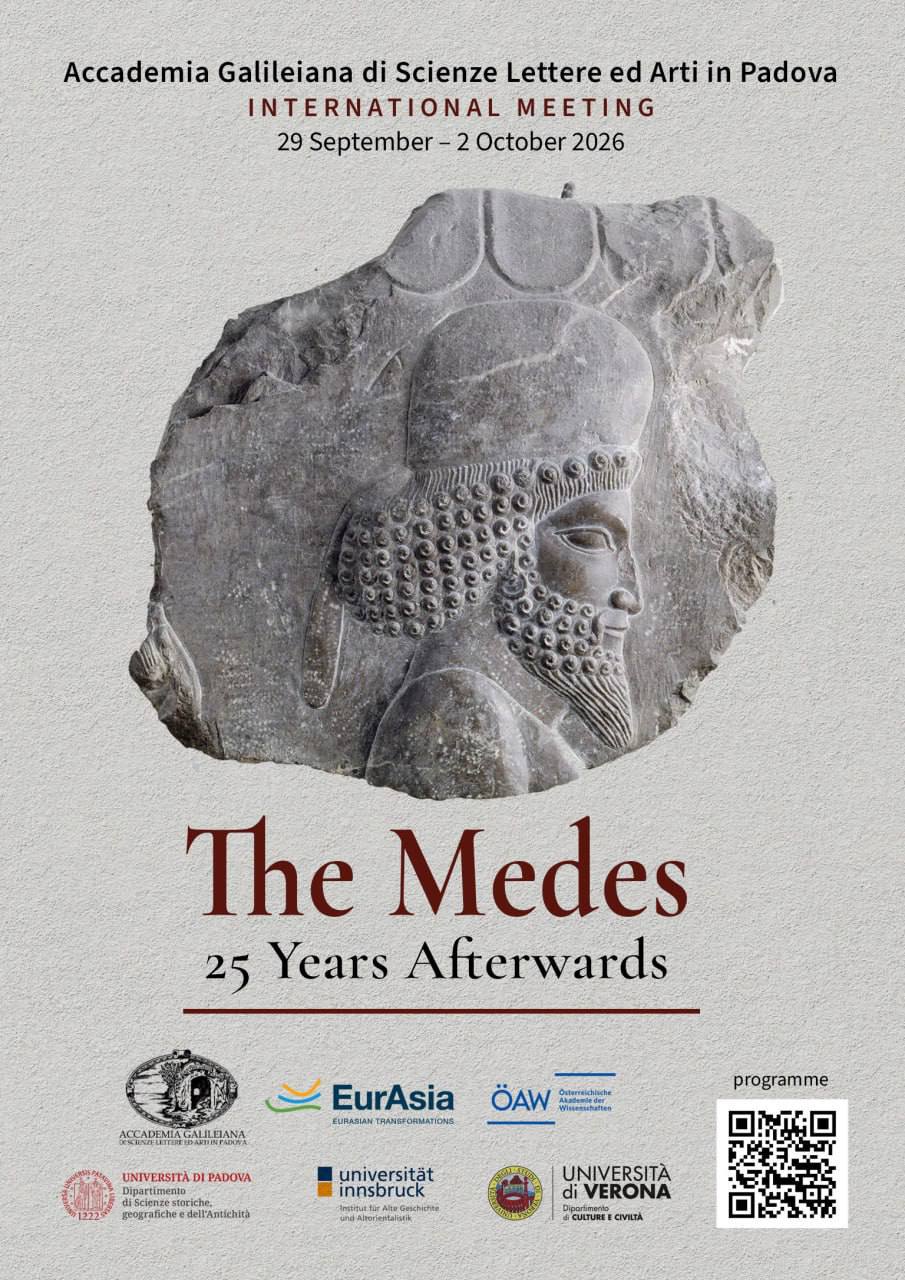
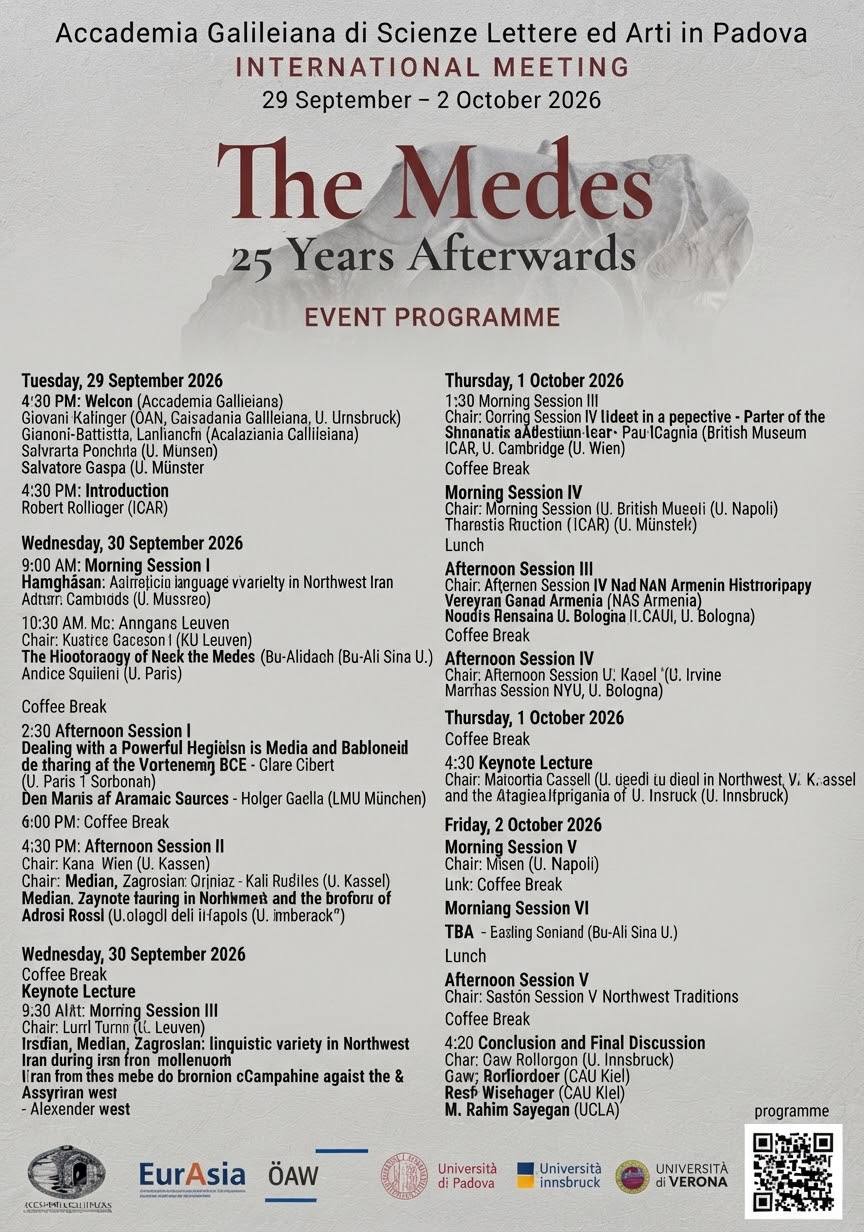
The international event "The Medes: 25 Years Afterwards"—held a quarter-century after the historic 2001 conference—once again brings together leading global scholars to examine the latest findings in archaeology, ancient history, and Iranian studies.
🏛️ About the Event
Dates: September 29 – October 2, 2026
Venue: Historic Hall of the Galilean Academy, Padua, Italy 🇮🇹
🎯 Key Conference Themes
New archaeological findings and material culture of the Median period
Greek and Roman historiography and Iranian traditions
Linguistics, geography, and the socio-political legacy of the Medes

Rule of Law and Bureaucracy in the Achaemenid Empire: Administrative Principles and Fundamental Governance

The Contraction of Political Vision: From Advanced Statecraft to Sectarian Constitutional

Learn About: The Criminal Consequences of Using Claims of Divine Superiority

Cultural Renaissance in Tajikistan: Reviving Authentic Persian Heritage through the Promotion of the Shahnameh
News-Civil

Learn About: Saudi Arabia’s Regional Security Implications

Statement on a Peaceful and Legitimate Political Framework for Afghanistan

By admin , 18 July, 2026

The existence of nuclear weapons represents one of the greatest dangers facing humanity in the modern era. While nuclear deterrence has often been presented as a mechanism for maintaining global stability, the reality remains that these weapons are controlled by political systems with competing ideologies, Parties interests, historical grievances, and military doctrines. This article critically examines the security concerns surrounding Pakistan, Israel, North Korea, and the United States, focusing on the dangers created when nuclear capabilities exist under governments facing accusations of extremism, aggressive strategic doctrines, human rights controversies, or historical records of devastating warfare.

By admin , 17 July, 2026

The assassination of United States President John Fitzgerald Kennedy on 22 November 1963 remains one of the most studied and controversial events in modern American history. Kennedy's death, occurring during a presidential motorcade in Dallas, Texas, shocked the world and triggered decades of investigations, scholarly debates, and public speculation. The official investigations concluded that Lee Harvey Oswald was responsible for the shooting and acted alone, yet questions surrounding the evidence, intelligence failures, the motives of possible actors, and the possibility of a broader conspiracy have continued to shape historical discussion. This article examines the background of Kennedy's presidency, the events of the assassination, the official investigations, competing theories, and the continuing historical significance of the case.

By admin , 17 July, 2026

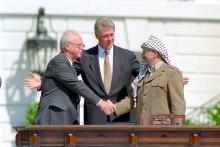
The assassination of Israeli Prime Minister Yitzhak Rabin on 4 November 1995 represents one of the most consequential acts of political violence in modern Middle Eastern history. Rabin's murder by Yigal Amir, an Israeli Jewish extremist opposed to the Oslo peace process, fundamentally altered the trajectory of Israeli-Palestinian relations and reshaped Israeli domestic politics. This article examines the historical background of the Oslo Accords, the political and religious motivations behind the assassination, the immediate and long-term consequences for Israeli society, and the broader implications for conflict resolution. Rather than viewing the assassination solely as an isolated act of terrorism, this study situates it within the wider context of ideological polarization, nationalist movements, democratic vulnerability, and peace-building in deeply divided societies.

By admin , 17 July, 2026

This article examines Saudi Arabia’s role in regional conflicts through three interconnected dimensions: (1) the global expansion of conservative Salafi religious networks, (2) the use of political and military influence through allied actors and proxy relationships, and (3) the Kingdom’s role in conflicts across the Middle East and Africa, including Yemen, Syria, Sudan, and the Horn of Africa. Particular attention is given to debates surrounding the relationship between Saudi religious networks and extremist movements such as al-Qaeda, ISIS, and Jabhat al-Nusra, while distinguishing between state policy, private financing networks, ideological influence, and militant organizations that operated independently.

By admin , 17 July, 2026

The Shahnameh of Ferdowsi is the greatest national epic of the Iranian people and one of the most important literary works in world literature. For generations, a popular belief has circulated that "Ferdowsi did not use a single Arabic word in the Shahnameh." This claim has been repeated in books, lectures, and on social media, but linguistic research has shown that it is not literally true.

By admin , 16 July, 2026

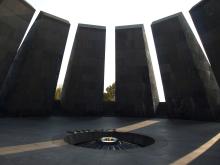
The Armenian Genocide of 1915–1917 represents one of the most consequential episodes of mass violence in modern history and remains a central case study in genocide scholarship. This article examines the destruction of Armenian communities within the Ottoman Empire during the First World War, focusing on the relationship between state policy, wartime security concerns, demographic transformation, and genocidal intent. Drawing upon Ottoman archival materials, diplomatic correspondence, survivor testimonies, demographic studies, and the broader historiography of genocide studies, this article analyzes the mechanisms through which mass deportation evolved into systematic destruction.

By admin , 16 July, 2026

About the Author

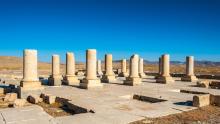
Yahya Zoka (1923–2001) was an Iranian scholar, university professor, historian of Iranian art, and one of Iran's foremost experts on artistic heritage. He was born in Tabriz.

By admin , 15 July, 2026

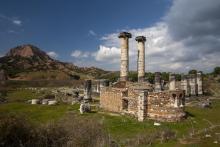
The Achaemenid Empire (c. 550–330 BCE) ruled most of what is now Turkey for over two centuries, but unlike in Iran, there are relatively few monumental buildings that are unmistakably "Persian." This is because the Achaemenids generally governed Anatolia through existing local kingdoms and cities rather than replacing them with entirely new Persian cities.

By admin , 15 July, 2026

The Sasanian (Sassanid) Empire (224–651 CE) controlled only a relatively small part of what is now Turkey, and usually only for limited periods. As a result, there are far fewer unmistakably Sasanian ruins in Turkey than Achaemenid or Roman/Byzantine remains. Most surviving sites are frontier fortifications, battlefields, or cities contested between the Roman/Byzantine and Sasanian empires, rather than monumental Sasanian palaces like those in Iran or Iraq.

By admin , 14 July, 2026

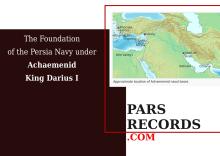
The establishment of a structured naval force under the Achaemenid Empire represents one of the most significant developments in the history of Persian maritime power. While maritime activities in the Persian world predate the Achaemenids by millennia, the reign of King Darius I (r. 522–486 BCE) marked a decisive transformation from regional seafaring traditions into an organized imperial naval system.